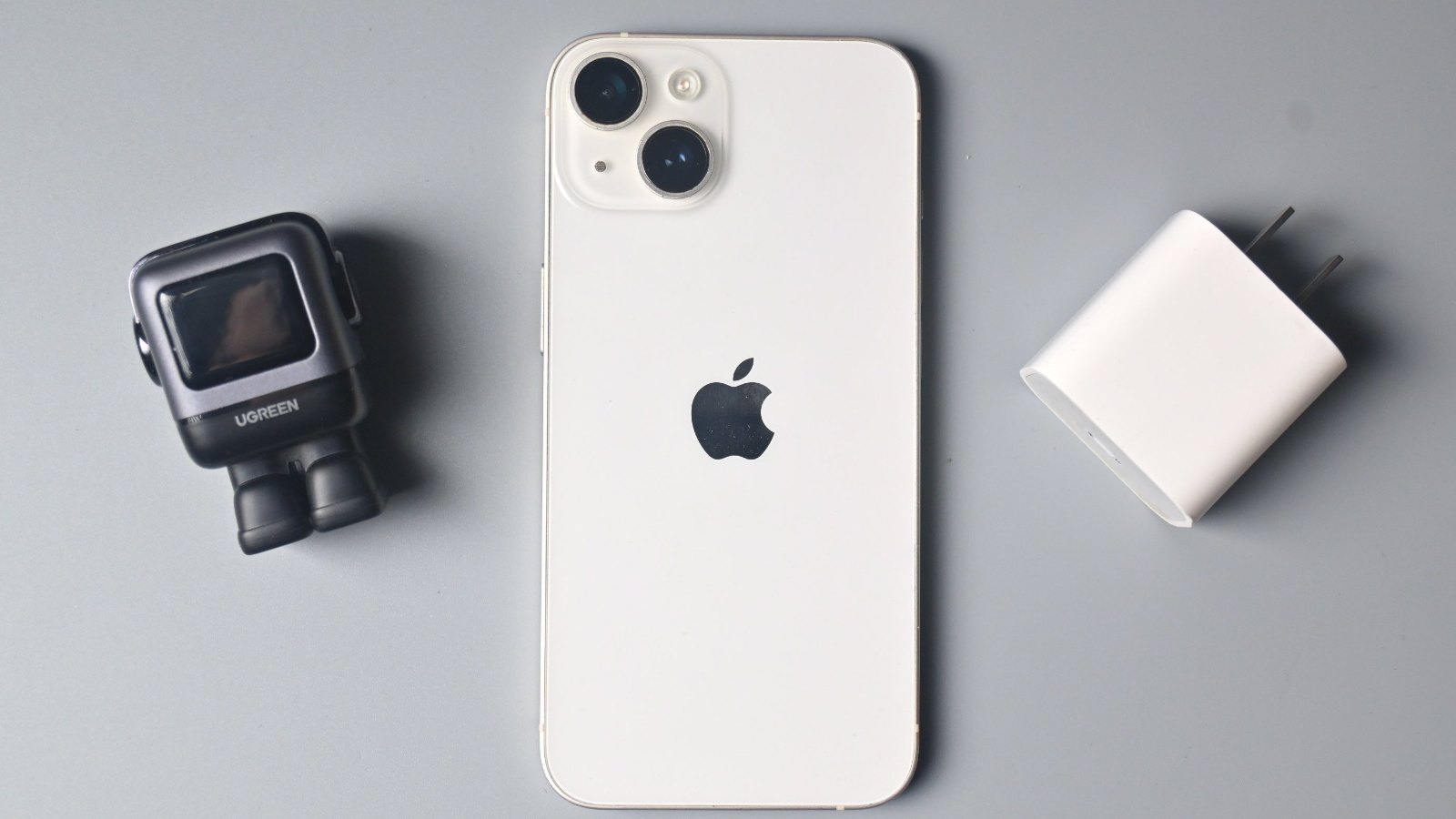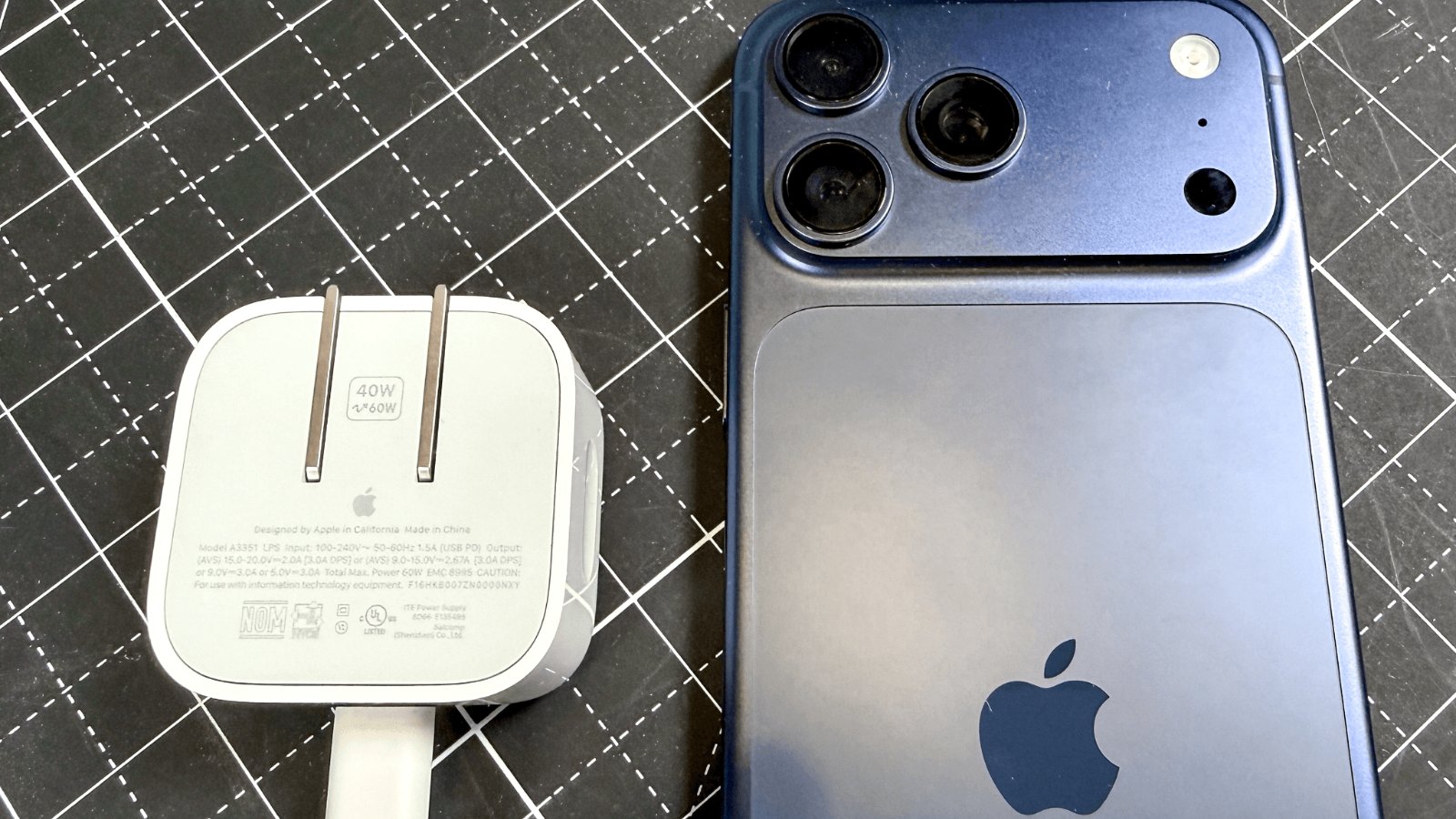
Fast charging on an iPhone depends on three things working together: the charger, the cable, and the phone. A 65W charger and an iPhone 18 Pro Max together do not guarantee fast charging — all three must support the same fast-charge protocol, or the phone falls back to a slower speed. This guide explains the protocols in plain language and lists every iPhone from the iPhone X to the iPhone 18 series, with Apple's official adapter guidance and third-party measured peaks kept strictly separate.
How Fast Charging Actually Works
Fast charging is a negotiation, not just a wattage number. When you plug an iPhone into a charger, the charger and the phone talk to each other over the cable and agree on a charging level. If they cannot agree on a fast-charging level, the phone charges at a slower, standard speed instead. That is why the charger, the cable, and the phone all have to support the same protocol.
USB PD: USB Power Delivery is the fast-charging language iPhones use. The charger offers the voltage and current levels it can supply, and the phone picks one it can accept. iPhone X through iPhone 14 models use USB PD over a USB-C to Lightning cable; iPhone 15 and later use USB PD over a USB-C to USB-C cable.
PD 3.1 / PD 3.2 and AVS: AVS stands for Adjustable Voltage Supply. It lets the charger fine-tune its voltage in very small steps while charging, instead of jumping between a few fixed levels. That fine control is what the newest iPhones need for their fastest speed. The iPhone 18 Pro and iPhone 18 Pro Max reach their fastest speed, a 60W peak, with PD 3.2 plus AVS; without AVS, they are capped at 27W. The standard iPhone 18 uses PD 3.1 plus AVS. When you shop for a charger for an iPhone 18 Pro, look for one that explicitly says it supports AVS — a high wattage number alone does not mean AVS is included.
PPS: PPS stands for Programmable Power Supply. It is a part of the USB PD standard that also lets a charger adjust voltage in small steps, and some Android phones use PPS steps for their fastest charging. iPhone fast charging is negotiated over USB PD, so do not assume an iPhone uses a PPS step. A charger advertising PPS does not by itself guarantee the fastest iPhone speed — check its USB PD and AVS support instead.
Wireless charging: On the newest models, wireless charging through MagSafe and Qi2 tops out at 25W, and only with a matching charger and power adapter. Older models are lower — for example, the iPhone 12 mini and iPhone 13 mini top out at 12W on MagSafe, and the iPhone 16 Pro and Pro Max list Qi2 at 15W. A wireless charger's headline wattage is a maximum rating, not the power the phone draws the whole time.
Does Low Power Mode Make Your iPhone Charge Faster?
No. Low Power Mode does not make your iPhone charge faster, and it does not enable fast charging.
Low Power Mode saves battery by cutting background activity — things like background app refresh and mail fetch slow down, and the phone uses less power while it runs. Because the phone is using less power while it charges, the battery percentage can climb slightly faster, so charging may look a little quicker.
But Low Power Mode does not change charging power, and it does not change the charging protocol. The charger, the cable, and the phone still negotiate the same way, at the same speed. If you want genuinely faster charging, the answer is a charger, cable, and phone that agree on the right USB PD level — not a battery setting.
How to Read the Tables Below
The tables below cover 39 iPhone models, from the iPhone X to the iPhone 18 series. Each row lists the model, its release year, its wired interface, the wired fast-charge protocol and how it is triggered, the Apple official recommended adapter configuration, Apple's official approximate 0 to 50% charging time, the wireless protocol and maximum power, and the third-party measured peak where a reliable value exists. Please read them with these four points in mind:
1. The "Apple official recommended adapter configuration" column is the charger configuration needed to reach Apple's official fast-charge speed. It is NOT the phone's maximum input watts. For example, an official requirement for a 40W adapter does not mean the phone draws 40W.
2. The "Third-party measured peak" column lists samples from specific third-party tests. These are NOT an Apple official limit, and results vary with the test equipment, temperature, and battery level. Where the source data has no reliable value, the row says "Not measured" — nothing has been invented to fill the gap.
3. The iPhone Duo has regional differences: the US version lists MagSafe and Qi2 at up to 25W, while the China version lists Qi2 at 15W. Check the official specification page for the region where the phone was sold.
4. The iPhone 12 mini and iPhone 13 mini are exceptions on wireless charging: their MagSafe cap is 12W, not the 15W of the other models in their generations.
Sources are listed at the end of each table section. Apple support pages are the source for the official columns; the third-party links are the source for the measured peaks.
iPhone X to iPhone 11: Fast Charging Reference
Each line reads: Model (year) — wired interface; wired fast-charge protocol; Apple official recommended adapter configuration; official approximate 0 to 50% time; wireless protocol and maximum power; third-party measured peak (non-official).
iPhone X (2017) — Lightning; USB PD via USB-C to Lightning cable; Official adapter: 18W or higher PD charger; About 30 minutes to 50%; Wireless: Qi, up to about 7.5W; Third-party measured peak: about 17W.
iPhone XR (2018) — Lightning; USB PD via USB-C to Lightning cable; Official adapter: 18W or higher PD charger; About 30 minutes to 50%; Wireless: Qi, up to about 7.5W; Third-party measured peak: Not measured.
iPhone XS (2018) — Lightning; USB PD via USB-C to Lightning cable; Official adapter: 18W or higher PD charger; About 30 minutes to 50%; Wireless: Qi, up to about 7.5W; Third-party measured peak: about 18.2W (single test).
iPhone XS Max (2018) — Lightning; USB PD via USB-C to Lightning cable; Official adapter: 18W or higher PD charger; About 30 minutes to 50%; Wireless: Qi, up to about 7.5W; Third-party measured peak: about 17–18W.
iPhone 11 (2019) — Lightning; USB PD via USB-C to Lightning cable; Official adapter: 20W or higher (current specification page); About 30 minutes to 50%; Wireless: Qi, up to about 7.5W; Third-party measured peak: Not measured.
iPhone 11 Pro (2019) — Lightning; USB PD via USB-C to Lightning cable; Official adapter: 18W or higher PD charger; About 30 minutes to 50%; Wireless: Qi, up to about 7.5W; Third-party measured peak: Not measured.
iPhone 11 Pro Max (2019) — Lightning; USB PD via USB-C to Lightning cable; Official adapter: 18W or higher PD charger; About 30 minutes to 50%; Wireless: Qi, up to about 7.5W; Third-party measured peak: Not measured.
iPhone SE (2nd generation) (2020) — Lightning; USB PD via USB-C to Lightning cable; Official adapter: 18W or higher PD charger; About 30 minutes to 50%; Wireless: Qi, up to about 7.5W; Third-party measured peak: Not measured.
Note: The iPhone 11 Pro and iPhone 11 Pro Max shipped with an 18W adapter in the box. None of these models supports MagSafe.
Sources — Apple official: https://support.apple.com/en-us/102574 (iPhone X, iPhone XR, iPhone XS, iPhone XS Max) https://support.apple.com/en-us/111865 (iPhone 11) https://support.apple.com/en-us/111879 (iPhone 11 Pro) https://support.apple.com/en-us/111878 (iPhone 11 Pro Max) https://support.apple.com/en-us/111882 (iPhone SE, 2nd generation)
Sources — third-party measured peaks: https://www.chargerlab.com/huawei-12000-40w-supercharge-power-bank-review-the-porsche-of-power-banks/ (iPhone X) https://www.chargerlab.com/aukey-pa-y19-27w-pd-charger-teardown-review-ganfast-inside/ (iPhone XS) https://www.chargerlab.com/apple-18w-usb-c-power-adapter-a1695-teardown-review-beautiful-inside-and-out/ (iPhone XS Max)
iPhone 12 to iPhone 14: Fast Charging Reference
Each line reads: Model (year) — wired interface; wired fast-charge protocol; Apple official recommended adapter configuration; official approximate 0 to 50% time; wireless protocol and maximum power; third-party measured peak (non-official).
iPhone 12 mini (2020) — Lightning; USB PD via USB-C to Lightning cable; Official adapter: 20W or higher PD charger; About 30 minutes to 50%; Wireless: MagSafe up to 12W; Qi 7.5W; Third-party measured peak: Not measured.
iPhone 12 (2020) — Lightning; USB PD via USB-C to Lightning cable; Official adapter: 20W or higher PD charger; About 30 minutes to 50%; Wireless: MagSafe up to 15W; Qi 7.5W; Third-party measured peak: Not measured.
iPhone 12 Pro (2020) — Lightning; USB PD via USB-C to Lightning cable; Official adapter: 20W or higher PD charger; About 30 minutes to 50%; Wireless: MagSafe up to 15W; Qi 7.5W; Third-party measured peak: Not measured.
iPhone 12 Pro Max (2020) — Lightning; USB PD via USB-C to Lightning cable; Official adapter: 20W or higher PD charger; About 30 minutes to 50%; Wireless: MagSafe up to 15W; Qi 7.5W; Third-party measured peak: Not measured.
iPhone 13 mini (2021) — Lightning; USB PD via USB-C to Lightning cable; Official adapter: 20W or higher PD charger; About 30 minutes to 50%; Wireless: MagSafe up to 12W; Qi 7.5W; Third-party measured peak: about 18W.
iPhone 13 (2021) — Lightning; USB PD via USB-C to Lightning cable; Official adapter: 20W or higher PD charger; About 30 minutes to 50%; Wireless: MagSafe up to 15W; Qi 7.5W; Third-party measured peak: about 23.8W.
iPhone 13 Pro (2021) — Lightning; USB PD via USB-C to Lightning cable; Official adapter: 20W or higher PD charger; About 30 minutes to 50%; Wireless: MagSafe up to 15W; Qi 7.5W; Third-party measured peak: about 23W.
iPhone 13 Pro Max (2021) — Lightning; USB PD via USB-C to Lightning cable; Official adapter: 20W or higher PD charger; About 30 minutes to 50%; Wireless: MagSafe up to 15W; Qi 7.5W; Third-party measured peak: about 27W.
iPhone SE (3rd generation) (2022) — Lightning; USB PD via USB-C to Lightning cable; Official adapter: 20W or higher PD charger; About 30 minutes to 50%; Wireless: Qi, up to about 7.5W; Third-party measured peak: Not measured.
iPhone 14 (2022) — Lightning; USB PD via USB-C to Lightning cable; Official adapter: 20W or higher PD charger; About 30 minutes to 50%; Wireless: MagSafe up to 15W; Qi 7.5W; Third-party measured peak: Not measured.
iPhone 14 Plus (2022) — Lightning; USB PD via USB-C to Lightning cable; Official adapter: 20W or higher PD charger; About 30 minutes to 50%; Wireless: MagSafe up to 15W; Qi 7.5W; Third-party measured peak: Not measured.
iPhone 14 Pro (2022) — Lightning; USB PD via USB-C to Lightning cable; Official adapter: 20W or higher PD charger; About 30 minutes to 50%; Wireless: MagSafe up to 15W; Qi 7.5W; Third-party measured peak: Not measured.
iPhone 14 Pro Max (2022) — Lightning; USB PD via USB-C to Lightning cable; Official adapter: 20W or higher PD charger; About 35 minutes to 50%; Wireless: MagSafe up to 15W; Qi 7.5W; Third-party measured peak: about 29W.
Note: The iPhone 12 mini and iPhone 13 mini top out at 12W on MagSafe, not 15W. With a higher-wattage adapter, the iPhone 13 models can briefly show readings above 20W; those are momentary readings, not the official fast-charge speed.
Sources — Apple official: https://support.apple.com/en-us/111877 (iPhone 12 mini) https://support.apple.com/en-us/111876 (iPhone 12) https://support.apple.com/en-us/102574 (iPhone 12 Pro) https://support.apple.com/en-us/111874 (iPhone 12 Pro Max) https://support.apple.com/en-us/111873 (iPhone 13 mini) https://support.apple.com/en-us/111872 (iPhone 13) https://support.apple.com/en-us/111871 (iPhone 13 Pro) https://support.apple.com/en-us/111870 (iPhone 13 Pro Max) https://support.apple.com/en-us/111866 (iPhone SE, 3rd generation) https://support.apple.com/en-us/111850 (iPhone 14) https://support.apple.com/en-us/111854 (iPhone 14 Plus) https://support.apple.com/en-us/111849 (iPhone 14 Pro) https://support.apple.com/en-us/111846 (iPhone 14 Pro Max)
Sources — third-party measured peaks: https://m.sensorexpert.com.cn/article/103594.html (iPhone 13 mini, iPhone 13) https://www.macrumors.com/2021/09/29/iphone-13-pro-max-charges-up-to-27w-speeds/ (iPhone 13 Pro) https://www.chargerlab.com/up-to-27w-charging-compatibility-test-of-apple-iphone-13-pro-max-20w-100w/ (iPhone 13 Pro Max) https://www.chargerlab.com/up-to-29w-charging-compatibility-test-of-apple-iphone-14-pro-max/ (iPhone 14 Pro Max)
iPhone 15 to iPhone 17: Fast Charging Reference
Each line reads: Model (year) — wired interface; wired fast-charge protocol; Apple official recommended adapter configuration; official approximate 0 to 50% time; wireless protocol and maximum power; third-party measured peak (non-official).
iPhone 15 (2023) — USB-C; USB PD (USB-C); Official adapter: 20W or higher PD charger; About 30 minutes to 50%; Wireless: MagSafe up to 15W; Qi 7.5W; Third-party measured peak: Not measured.
iPhone 15 Plus (2023) — USB-C; USB PD (USB-C); Official adapter: 20W or higher PD charger; About 30 minutes to 50%; Wireless: MagSafe up to 15W; Qi 7.5W; Third-party measured peak: Not measured.
iPhone 15 Pro (2023) — USB-C; USB PD (USB-C); Official adapter: 20W or higher PD charger; About 30 minutes to 50%; Wireless: MagSafe up to 15W; Qi 7.5W; Third-party measured peak: Not measured.
iPhone 15 Pro Max (2023) — USB-C; USB PD (USB-C); Official adapter: 20W or higher PD charger; About 30 minutes to 50%; Wireless: MagSafe up to 15W; Qi 7.5W; Third-party measured peak: about 27W.
iPhone 16 (2024) — USB-C; USB PD (USB-C); Official adapter: 20W or higher PD charger; About 30 minutes to 50%; Wireless: MagSafe up to 25W; Qi2 up to 25W; Third-party measured peak: about 20–23W (varies by test and conditions).
iPhone 16 Plus (2024) — USB-C; USB PD (USB-C); Official adapter: 20W or higher PD charger; About 30 minutes to 50%; Wireless: MagSafe up to 25W; Qi2 up to 25W; Third-party measured peak: about 26–27W (specific test).
iPhone 16 Pro (2024) — USB-C; USB PD (USB-C); Official adapter: 20W or higher PD charger; About 30 minutes to 50%; Wireless: MagSafe up to 25W; Qi2 up to 15W; Third-party measured peak: about 20W (specific test).
iPhone 16 Pro Max (2024) — USB-C; USB PD (USB-C); Official adapter: 20W or higher PD charger; About 30 minutes to 50%; Wireless: MagSafe up to 25W; Qi2 up to 15W; Third-party measured peak: about 26–27W (not under heavy load).
iPhone 16e (2025) — USB-C; USB PD (USB-C); Official adapter: 20W or higher PD charger; About 30 minutes to 50%; Wireless: Qi up to 7.5W; no built-in MagSafe; Third-party measured peak: Not measured.
iPhone 17 (2025) — USB-C; USB PD (USB-C); Official adapter: 40W or higher PD charger; About 20 minutes to 50%; Wireless: MagSafe up to 25W; Qi2 25W (compatible devices); Third-party measured peak: about 27–28W.
iPhone 17 Pro (2025) — USB-C; USB PD (USB-C); Official adapter: 40W or higher PD charger; About 20 minutes to 50%; Wireless: MagSafe up to 25W; Qi2 25W (compatible devices); Third-party measured peak: about 36W (17 Pro series reference).
iPhone 17 Pro Max (2025) — USB-C; USB PD (USB-C); Official adapter: 40W or higher PD charger; About 20 minutes to 50%; Wireless: MagSafe up to 25W; Qi2 25W (compatible devices); Third-party measured peak: about 36W.
iPhone Air (2025) — USB-C; USB PD (USB-C); Official adapter: 20W or higher PD charger; About 30 minutes to 50%; Wireless: MagSafe up to 20W; Qi2 up to 20W; Third-party measured peak: about 18–19W.
iPhone 17e (2026) — USB-C; USB PD (USB-C); Official adapter: 20W or higher PD charger; About 30 minutes to 50%; Wireless: MagSafe up to 15W; Qi2 15W; Third-party measured peak: Not measured.
Note: On the iPhone 16 models, the 25W MagSafe speed needs a matching newer MagSafe charger and a 30W or higher adapter. Also note the iPhone 16 split: the iPhone 16 and 16 Plus list Qi2 at up to 25W, while the iPhone 16 Pro and Pro Max list Qi2 at 15W. The iPhone 17's 40W adapter figure is Apple's official fast-charge test condition, not the phone's input power. Do not confuse the iPhone Air's 20W official adapter configuration with the iPhone 17 and 17 Pro models' 40W configuration.
Sources — Apple official: https://support.apple.com/en-us/111831 (iPhone 15) https://support.apple.com/en-us/111830 (iPhone 15 Plus) https://support.apple.com/en-us/111829 (iPhone 15 Pro) https://support.apple.com/en-us/111828 (iPhone 15 Pro Max) https://support.apple.com/en-us/121029 (iPhone 16) https://support.apple.com/en-us/121030 (iPhone 16 Plus) https://support.apple.com/en-us/121031 (iPhone 16 Pro) https://support.apple.com/en-us/121032 (iPhone 16 Pro Max) https://support.apple.com/en-us/122208 (iPhone 16e) https://support.apple.com/en-us/125089 (iPhone 17) https://support.apple.com/en-us/125090 (iPhone 17 Pro) https://support.apple.com/en-us/125091 (iPhone 17 Pro Max) https://support.apple.com/en-us/125092 (iPhone Air) https://support.apple.com/en-us/126470 (iPhone 17e)
Sources — third-party measured peaks: https://www.chargerlab.com/which-one-is-faster-charging-comparison-of-iphone-14-pro-max-15-pro-max/ (iPhone 15 Pro Max) https://www.macrumors.com/2025/09/26/iphone-17-usb-c-charging-speed-test/ (iPhone 16, iPhone 17, iPhone 17 Pro) https://www.phonearena.com/news/no-iphone-16-not-charging-faster_id162972 (iPhone 16 Plus, iPhone 16 Pro, iPhone 16 Pro Max) https://www.chargerlab.com/compatibility-test-of-iphone-17-pro-max/ (iPhone 17 Pro Max) https://www.macrumors.com/2025/09/30/IPHONE-AIR-USB-C-CHARGING-SPEEDS-TESTED/ (iPhone Air)
iPhone 18 Series: Fast Charging Reference
Each line reads: Model (year) — wired interface; wired fast-charge protocol; Apple official recommended adapter configuration; official approximate 0 to 50% time; wireless protocol and maximum power; third-party measured peak (non-official).
iPhone 18 Pro (2026) — USB-C; USB PD 3.2 AVS (fastest tier); Official adapter: over 60W with SPR AVS support (PD 3.2); About 15 minutes to 50%; Wireless: MagSafe up to 25W; Qi2 up to 25W (35W adapter); Third-party measured peak: about 40W (that test).
iPhone 18 Pro Max (2026) — USB-C; USB PD 3.2 AVS (fastest tier); Official adapter: over 60W with SPR AVS support (PD 3.2); About 15 minutes to 50%; Wireless: MagSafe up to 25W; Qi2 up to 25W (35W adapter); Third-party measured peak: about 52.9W.
iPhone Duo (2026) — USB-C; USB PD (Apple does not require AVS for this model); Official adapter: 60W-capable USB PD charger and 60W-compliant USB-C cable; About 20 minutes to 50%; Wireless: US version MagSafe and Qi2 up to 25W; China version Qi2 15W; Third-party measured peak: Not measured.
iPhone 18 (2026) — Unreleased / pending confirmation. Charging specifications for this model have not been confirmed, so no power, adapter, or charging-time figures are listed for it here.
Note: For the iPhone 18 Pro models, Apple's help page requires a third-party PD 3.2 AVS charger for the fastest speed; some Apple technical specification tables describe it as PD 3.1 or newer plus AVS. Either way, choose a charger that explicitly supports AVS. The iPhone Duo is different: Apple requires a 60W-capable USB PD charger and suitable cable, but does not require AVS for it. Check the official specification page for your region before quoting the Duo's wireless figures.
Sources — Apple official: https://support.apple.com/en-us/148590 (iPhone 18 Pro) https://support.apple.com/en-us/148591 (iPhone 18 Pro Max) https://support.apple.com/en-us/148588 (iPhone Duo) https://www.apple.com/iphone/ (iPhone 18 standard model — unreleased as of the source data date)
Sources — third-party measured peaks: https://www.chargerlab.com/charging-review-of-iphone-18-pro/ (iPhone 18 Pro) https://www.chargerlab.com/charging-review-of-iphone-18-pro-max/ (iPhone 18 Pro Max)
An AVS-Capable Charger Example: UGREEN Nexode Air 65W
For the iPhone 18 Pro and Pro Max, the fastest wired speed needs a charger that explicitly supports PD 3.2 plus AVS. A high wattage number on the box is not enough on its own — check that the charger lists AVS support, and pair it with a cable rated for the power you need.
The charger below is the example of an AVS-capable charger used in this guide: the UGREEN Nexode Air 65W, a compact 65W USB-C GaN wall charger with a foldable plug and an included 3.3-foot USB-C cable. Before you buy any charger, confirm the protocol support listed for the exact model you are buying, and check the cable's rating too — the charger, the cable, and the phone all have to agree.

UGREEN Nexode Air USB-C Charger (65W, GaN, Foldable Plug)
The UGREEN Nexode Air is a compact 65W USB-C GaN wall charger with foldable prongs and an included 3.3-foot USB-C cable, intended for charging laptops, tablets, phones, and other USB-C devices.
- 65W USB-C output with GaN technology
- Foldable prongs for travel and storage
- Includes a 3.3 ft USB-C to USB-C cable
- Single USB-C port
- Features Thermal Guard and 8-layer safety protection
- Supports PD3.2 + AVS
Affiliate disclosure: SoftClick Lab may earn a commission if you buy through these links, at no additional cost to you.
Prices and availability may change. Check the retailer before buying.FAQ
Does Low Power Mode enable fast charging? No. Low Power Mode saves battery by cutting background activity, so the battery percentage may climb slightly faster, but it does not change charging power or the charging protocol.
Will a 65W charger fast-charge any iPhone? Not by itself. The charger, the cable, and the phone must all support the same fast-charge protocol. A 65W charger with an iPhone 18 Pro Max still falls back to a slower speed if the charger does not support the protocol the phone needs — for the fastest speed, the iPhone 18 Pro needs PD 3.2 plus AVS.
What is the fastest wireless charging on an iPhone? On the newest models, MagSafe and Qi2 top out at 25W with a matching charger and power adapter. Older models are lower, and the iPhone Duo's Qi2 figure differs by region: 25W in the US version, 15W in the China version.
Why do third-party tests show higher watts than Apple's adapter guidance? Apple's adapter figure is the charger configuration needed to reach the official fast-charge speed, not the phone's maximum input power. Third-party measured peaks are samples from specific tests, not official limits, and they vary with equipment, temperature, and battery level.
Bottom Line
Fast charging on iPhone is a three-way agreement between the charger, the cable, and the phone. Check the tables above for your model, match the official adapter configuration, and for the iPhone 18 Pro models, make sure the charger explicitly supports PD 3.2 plus AVS. Low Power Mode will not speed up charging — it only helps the battery last longer while you use the phone.
This article is a starting point for comparing products and features. It does not claim that we performed hands-on testing of the products mentioned. Check current specifications, compatibility, and prices before buying.